Hit enter to search or ESC to close
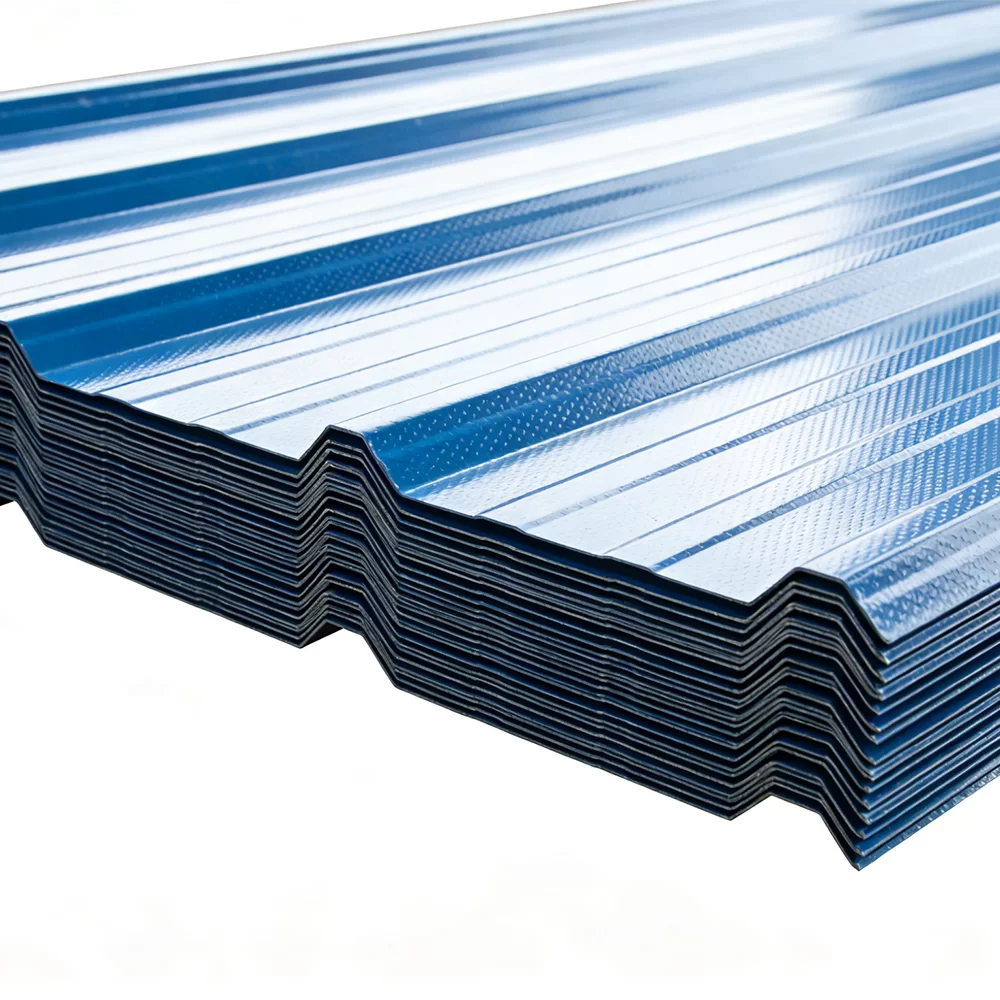
Transitioning from manual fabrication to automated precision is the primary challenge for modern structural metal enterprises. While traditional welding relies heavily on operator skill, leading facilities are now integrating high-performance robotics to eliminate human error and stabilize production throughput. For those seeking a China PC Lighting Corrugated Tile integrated solution or heavy-duty structural components, the underlying quality depends entirely on the precision of the joining process. Our industrial welding robots bridge the gap between complex architectural designs and scalable manufacturing, utilizing multi-axis articulation to handle intricate seams that were previously labor-intensive.

The evolution of metal structure manufacturing is defined by the shift toward intelligent programmable control. Modern industrial welding robots are no longer just tools but are core components of an automated production line. By integrating a high-precision mechanical arm with an advanced welding power source, these systems can execute repetitive tasks with absolute uniformity, ensuring that every joint meets the strict requirements of international standards such as ISO and ASTM.
For enterprises focusing on portal frame workshops or space truss structures, the ability to maintain high positioning accuracy is critical. Robotic automation allows for 24/7 continuous operation, which drastically reduces lead times and operational overhead. This shift not only increases the volume of output but also ensures that the structural integrity of each component is verified through consistent, data-driven execution, reducing the waste associated with manual rework.

The core value of an industrial welding robot lies in its flexible multi-axis articulation. Unlike fixed automation, these robots can navigate complex geometries and intricate welding seams, making them indispensable for non-standard steel components. The intelligent control system allows operators to fine-tune parameters in real-time, ensuring that the heat input and weld bead consistency are optimized for the specific thickness and grade of the metal being processed.
Robotic welding solutions are widely deployed across diverse sectors where structural reliability is non-negotiable. In the construction of high-rise buildings and bridge steelwork, the robots handle the heavy-duty welding of primary beams and columns. In the automotive and construction machinery industries, they are used for high-volume chassis and frame assembly, where speed and consistency are the primary drivers of ROI.
Beyond heavy industry, these systems are essential for producing standardized components used in logistics warehouses and commercial complexes. By replacing repetitive manual labor, enterprises can achieve a significant increase in overall production throughput. The integration of real-time monitoring and quality analytics ensures that every weld is compliant with project specifications before the product ever leaves the factory floor.
| Performance Metric | Manual Welding | Robot Automation | Impact on ROI |
|---|---|---|---|
| Production Speed | Standard/Slow | Ultra-High Speed | Faster Delivery |
| Weld Consistency | Variable | Absolute Uniformity | Lower Reject Rate |
| Labor Cost | High Recurring | Low Long-term | Reduced Overhead |
| Error Rate | Moderate | Minimal/Near Zero | Higher Quality |
| Operating Hours | Shift-limited | 24/7 Continuous | Maximized Capacity |
When selecting a partner for automated fabrication, it is crucial to look beyond the hardware. A truly capable supplier provides full-chain empowered solutions, including drawing optimization, 3D modeling, and prefabrication. The ability to integrate robotic cells into an existing workflow requires a deep understanding of the National Code for Welding of Steel Structures (GB50661-2011) and other global certifications like CE.
Precision is the soul of structural integrity. A benchmark manufacturer ensures that raw materials are strictly controlled and that the final processing precision error is kept within tight tolerances. By leveraging a supply chain of qualified supporting enterprises and utilizing CNC laser and flame cutting machines, the transition to robotic welding becomes a seamless upgrade that enhances the market competitiveness of the final product.
The future of the steel structure industry lies in the convergence of Remote Diagnostics and AI-driven scheduling. We are moving toward a landscape where welding robots can automatically adjust their paths based on sensor feedback, further reducing the need for manual calibration. This evolution will allow for even greater customization of non-standard parts without sacrificing the speed of mass production.
For global infrastructure projects, the standardization of steel components will be driven by these intelligent systems. As the industry moves toward more sustainable and efficient building materials, the role of automation will be to minimize material waste and maximize the lifecycle of the structure through superior weld quality. Enterprises that adopt these technologies now will be positioned as the leaders in the next generation of intelligent manufacturing.
They are ideal for steel structure fabrication, automobile and auto parts manufacturing, construction machinery, and any high-volume hardware production requiring precision welding.
Yes, our robots feature flexible movement and high-precision control systems specifically designed to navigate complex welding seams and intricate workpieces.
No, the system is designed with a user-friendly interface and simplified programming, allowing operators to set up and run production lines with minimal training.
ROI is improved through significantly higher production speeds, reduced waste from errors, and a drastic reduction in long-term labor expenses.
These robots are engineered for a long service life with low maintenance costs, typically requiring only routine lubrication and periodic software updates.
Yes, they feature strong compatibility with various industrial welding processes and power sources to fit your specific technical requirements.
Ready to automate your production line? Our team provides one-stop steel structure solutions covering design, processing, and intelligent installation to help you achieve superior weld quality and maximized throughput.