Hit enter to search or ESC to close
When evaluating high-impact architectural materials, engineers often struggle to balance transparency with structural resilience. The selection of a glazing material is rarely about aesthetics alone; it is about surviving extreme environmental stress while maintaining operational visibility. In the context of modern industrial design, this requirement has led to the widespread adoption of high-performance polymers that can withstand mechanical shocks that would shatter traditional glass.
The technical superiority of China Solid PC Sheet lies in its molecular structure, which provides an exceptional strength-to-weight ratio. This makes it a critical component when integrated with broader infrastructure systems, such as PC Roofing & Lighting Sheet or specialized Steel Structure components. For industries operating in volatile environments, the ability to prevent catastrophic failure through impact resistance is not just a feature—it is a primary safety requirement that reduces long-term liability and maintenance overhead.
Navigating the procurement of these materials requires a deep understanding of grade, thickness, and UV stabilization. This guide examines the technical performance and practical application of China Solid PC Sheet, providing a framework for buyers to assess quality and ensure compatibility with industrial steel frameworks and intelligent manufacturing standards.


Solid polycarbonate is a thermoplastic polymer characterized by its transparency and extreme toughness. Unlike multi-wall sheets, the solid variety provides a continuous, dense molecular matrix that eliminates the internal air pockets found in cellular structures. This density is what allows the material to maintain optical clarity similar to glass while providing mechanical properties that far exceed traditional glazing options in industrial settings.
From a structural perspective, these sheets are designed to be integrated into larger systems, often acting as the protective skin for steel structures. The interaction between the thermal expansion of the polymer and the rigidity of the supporting metal frame is a critical engineering consideration. When processed under strict quality controls, these sheets offer a seamless blend of lightweight properties and heavy-duty protection, making them indispensable for safety shielding and environmental barriers.
The durability of polycarbonate is not intrinsic but depends heavily on additive stabilization. The most critical factor is UV resistance; without a co-extruded UV-protective layer, the polymer chains degrade under solar radiation, leading to yellowing and embrittlement. High-grade industrial sheets incorporate advanced UV stabilizers that block harmful wavelengths, extending the service life of the material in outdoor rooftop and lighting applications.
The core value of professional-grade PC sheets is their ability to maintain a high impact threshold—often 200 times that of glass—even after years of exposure to fluctuating temperatures and atmospheric pollutants.
Additionally, thermal stability plays a vital role. In environments where the material is paired with heat-generating industrial equipment or exposed to direct sunlight, the coefficient of linear thermal expansion must be managed. Proper installation techniques, such as using oversized mounting holes and flexible gaskets, prevent the material from bowing or cracking during extreme temperature cycles, ensuring the integrity of the enclosure.
When comparing solid polycarbonate to other transparent materials, the primary metric is the impact strength measured in kJ/m². While acrylic provides better scratch resistance and tempered glass offers high hardness, neither can match the ductility of polycarbonate. This ductility allows the material to deform and absorb energy during a collision rather than fracturing, which is a decisive safety advantage in hazardous industrial zones.
The following data represents the relative performance of polycarbonate against common alternatives across key industrial requirements. The emphasis is on the material's ability to withstand sudden mechanical loads, which is the primary driver for its use in safety shielding and high-traffic roofing systems.
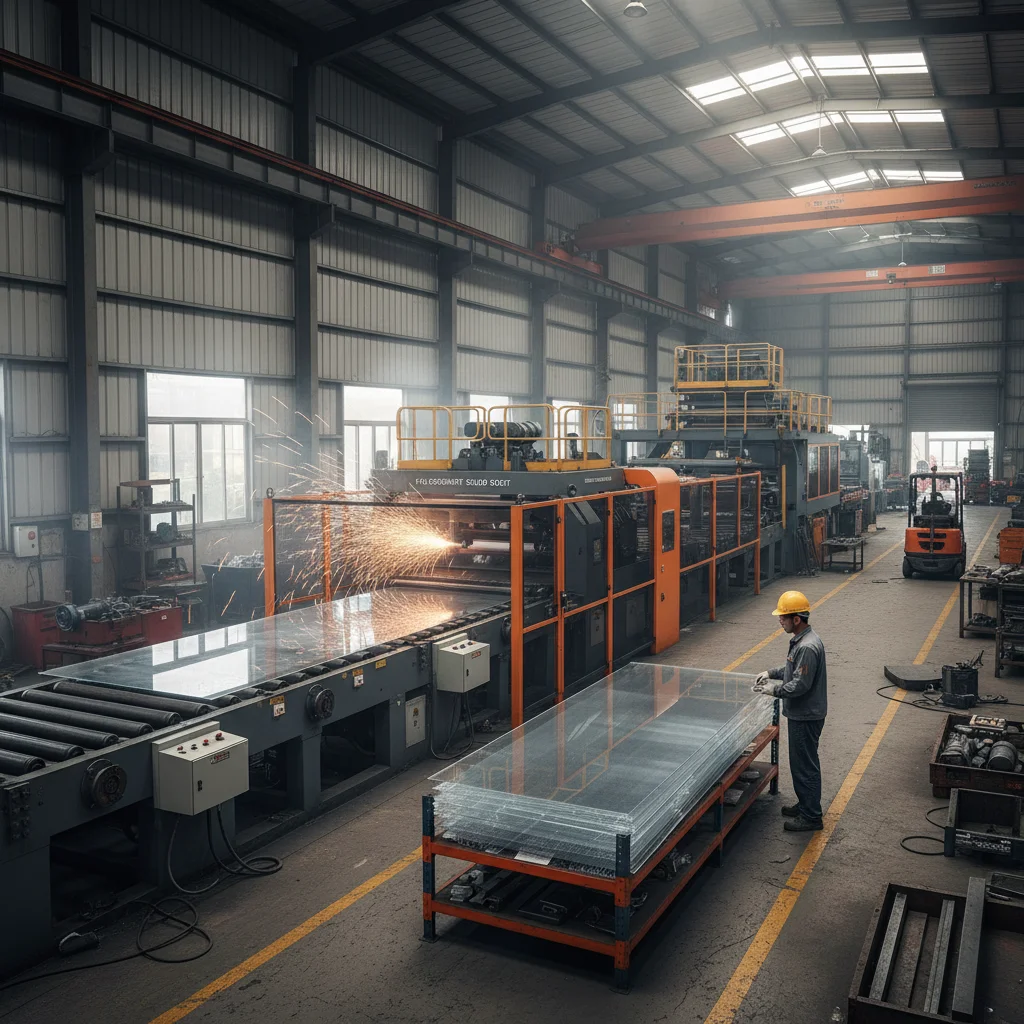
The integration of solid PC sheets is most evident in environments where safety and light transmission are non-negotiable. In industrial workshops, they are frequently used as machine guards, protecting operators from flying debris without obstructing the view of the process. When coupled with the precision of Steel Structure Equipment, these sheets create durable enclosures that are easy to replace and maintain over long operational cycles.
Beyond the factory floor, these materials are essential for municipal and commercial infrastructure. From sound barriers on highways to high-security partitions in public transport hubs, the material's ability to be thermoformed allows for complex curved geometries. This flexibility enables architects to create organically shaped structures that maintain the strength of a solid wall while providing the openness of a window.
The shift toward intelligent manufacturing has influenced how polycarbonate sheets are produced and deployed. The industry is moving away from generic thicknesses toward application-specific grades. For instance, sheets designed for security applications now feature enhanced abrasion-resistant coatings, bridging the gap between the toughness of polycarbonate and the surface hardness of glass.
Furthermore, there is a growing synergy between polymer skins and intelligent steel frameworks. By using CNC-calculated precision in the supporting steel structures, the gap between the frame and the sheet is minimized, reducing vibration and wind-noise. This systemic approach ensures that the material is not just a filler but a structural component of the building envelope.
Future developments are likely to focus on sustainable production and the integration of functional additives. We are seeing an increase in anti-static and flame-retardant grades that meet stringent international safety codes, making them suitable for energy storage facility enclosures and power distribution environments where fire prevention is paramount.
Despite its strengths, polycarbonate requires specific handling to avoid premature failure. The most common issue is surface scratching during installation; using protective films until the final handover is mandatory. Additionally, the use of incorrect chemical solvents for cleaning can lead to stress-cracking (crazing), which compromises the structural integrity of the sheet over time.
Maintenance strategies should focus on the sealing points. Because the material expands and contracts more than the steel it is attached to, gaskets must be checked annually for compression set. Using high-quality EPDM rubbers ensures that the seal remains watertight even as the polycarbonate sheet shifts slightly during seasonal temperature changes.
For large-scale procurement, the decision matrix should involve a balance of thickness and support span. Thicker sheets allow for wider spacing between steel supports, reducing the overall weight of the framework, but increase the material cost. A calculated approach to this ratio is the key to optimizing the total cost of ownership.
| Requirement | Solid PC Sheet | Tempered Glass | Acrylic (PMMA) |
|---|---|---|---|
| Impact Resistance | Extreme High | Moderate | Low |
| Optical Clarity | High | Very High | Excellent |
| Weight Factor | Lightweight | Heavy | Lightweight |
| UV Stability | Coated Required | Intrinsic | Intrinsic |
| Formability | Cold-bendable | None | Heat-formed |
| Failure Mode | Ductile/Safe | Fragmented | Brittle/Sharp |
Solid polycarbonate sheets are single, dense layers of polymer, whereas hollow sheets contain internal ribs and air channels. Solid sheets provide significantly higher impact resistance, better optical clarity, and a more professional aesthetic, making them suitable for safety shields and architectural glazing where structural strength is more critical than thermal insulation.
Only if they lack a UV-protective coating. High-quality China Solid PC Sheets are co-extruded with a UV-resistant layer that protects the polymer chains from solar degradation. When this coating is present, the material maintains its transparency and mechanical properties for many years, preventing the yellowing associated with lower-grade plastics.
The safest method is using a mild soap solution and a soft microfiber cloth. It is critical to avoid ammonia-based cleaners, alcohol, or abrasive scrubbing pads, as these can cause chemical stress-cracking or permanent surface scratches that reduce light transmission and weaken the material's impact resistance.
Yes, they are specifically designed for integration with steel frameworks. However, because polycarbonate has a higher thermal expansion coefficient than steel, you must use flexible mounting systems. This includes using rubber gaskets and drilling holes slightly larger than the fasteners to allow the sheet to move without buckling.
Thickness selection depends on the expected impact energy and the support span. For general safety partitions, 3mm to 6mm is common. For high-impact security or ballistic-grade requirements, thicknesses of 10mm or more are used. Always calculate the deflection limit to ensure the sheet does not bend excessively under pressure.
Verify if the supplier provides material certifications and test reports for UV stability and impact strength. Check if their production process follows international standards like ISO. A reliable supplier will be able to specify the exact grade of resin used and provide data on the UV-layer thickness and duration of protection.
The selection of China Solid PC Sheet represents a strategic decision to prioritize safety, durability, and light transmission in industrial infrastructure. By understanding the critical roles of UV stabilization and thermal expansion management, engineers can leverage this material to create environments that are both transparent and virtually indestructible. When correctly paired with precision-engineered steel structures, polycarbonate provides a lifecycle value that far outweighs the initial cost of premium glazing.
For organizations looking to upgrade their facility protections or develop new architectural projects, sourcing materials from a supplier that understands the intersection of polymer science and structural engineering is essential. You can explore high-performance material solutions and industrial equipment specifications by visiting www.ymc-machinery.com to ensure your infrastructure meets the highest safety and efficiency standards.