Hit enter to search or ESC to close


The H-beam Automatic Submerged Arc Welding Machine is a premier, high-efficiency solution specifically engineered for the longitudinal seam welding of H-beams within advanced steel structure production lines. By integrating state-of-the-art single-wire or double-wire submerged arc welding technology, this machine ensures exceptional stability and superior weld strength, making it an indispensable asset for large-scale industrial fabrication.
Designed to meet the rigorous demands of the modern construction and machinery sectors, this equipment optimizes the welding process for both webs and flanges. It delivers an ideal combination of high-speed automation, precise weld formation, and long-term operational reliability, significantly reducing labor costs while enhancing the overall structural integrity of the manufactured steel components.
| Equipment Type | H-beam Automatic Submerged Arc Welding Machine | Welding Mode | Submerged Arc Welding (SAW) |
|---|---|---|---|
| Welding Configuration | Single-wire or Double-wire Options | Primary Application | H-beam Longitudinal Seam Welding |
| Target Components | H-beam Web and Flange | Operation Mode | Fully Automatic / Semi-Automatic |
| Speed Control | Automatic Welding Speed Adjustment | Structural Design | Heavy-duty Solid Steel Frame |
| Core Performance | High Stability & Anti-interference | Maintenance Level | Low failure rate / Low maintenance |
Utilizes advanced submerged arc technology to produce smooth, firm, and high-strength welds with excellent formation.
Accelerates production cycles with rapid welding speeds and automated transitions, maximizing factory throughput.
Features automatic speed adjustment and high-degree automation to minimize manual intervention and errors.
Engineered with strong anti-interference capabilities to ensure consistent operation in harsh industrial environments.
Simple control interface allows operators to achieve professional results with minimal training and low failure rates.
Built with a solid, heavy-duty structure designed for continuous industrial use and long-term durability.
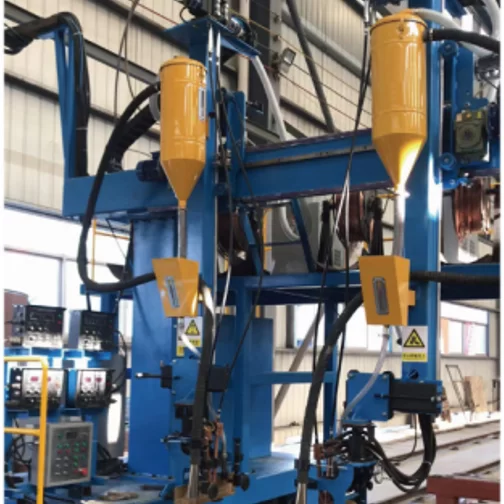
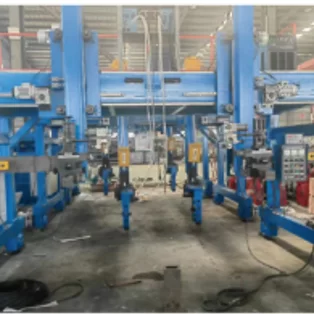
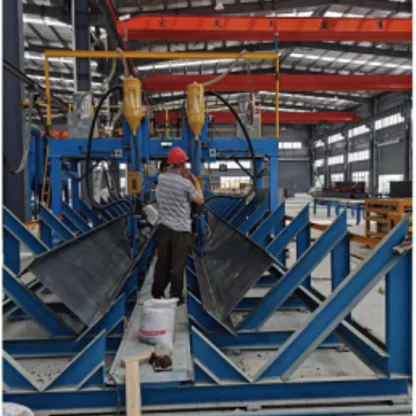
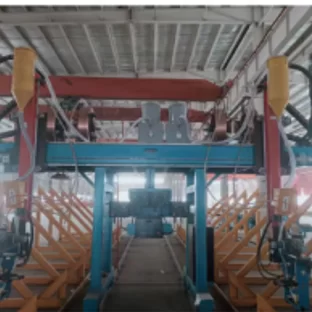
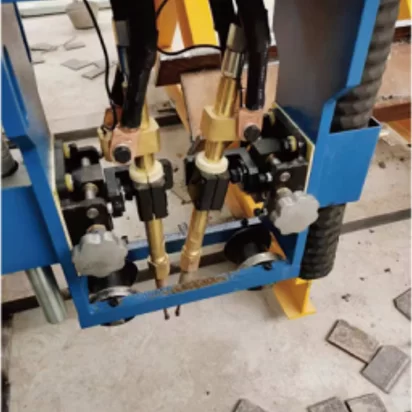
Seamlessly integrates into existing H-beam production lines for streamlined workflow management.
Precision adjustment of welding currents and speeds via an intuitive digital management interface.
Real-time tracking of weld stability to ensure every H-beam meets international structural standards.
High automation allows a single operator to oversee multiple welding stations, reducing overhead.
Optimized loading and unloading sequences to minimize downtime between welding cycles.
Systematic diagnostics to notify management of required service intervals, preventing unexpected downtime.
| Performance Metric | Manual Welding | Automatic SAW Machine |
|---|---|---|
| Production Speed | Low / Variable | High / Constant |
| Weld Consistency | Operator Dependent | Standardized & Precise |
| Labor Requirement | High Man-hours | Minimal Staffing |
| Defect Rate | Moderate to High | Extremely Low |
| Long-term ROI | Low (High Operating Cost) | High (Low Unit Cost) |
Submerged arc welding provides deeper penetration, higher deposition rates, and a smoother finish without spatter, which is critical for the structural integrity of heavy-duty H-beams.
Yes, the machine is designed for various structural steel grades. By adjusting the welding parameters and selecting the appropriate flux and wire, it ensures optimal bonding for diverse metals.
It maintains a constant heat input regardless of the beam length, preventing overheating or under-welding, which ensures a uniform weld bead and eliminates structural weak points.
While designed for production lines, its high efficiency and low labor requirement make it a great investment for any workshop looking to scale their H-beam production and improve quality.
Maintenance is minimal and primarily involves regular cleaning of the flux recovery system and checking the guiding rails to ensure smooth movement of the welding head.
It reduces costs by decreasing manual labor needs, minimizing material waste through precision welding, and drastically reducing the time spent on post-weld grinding and corrections.