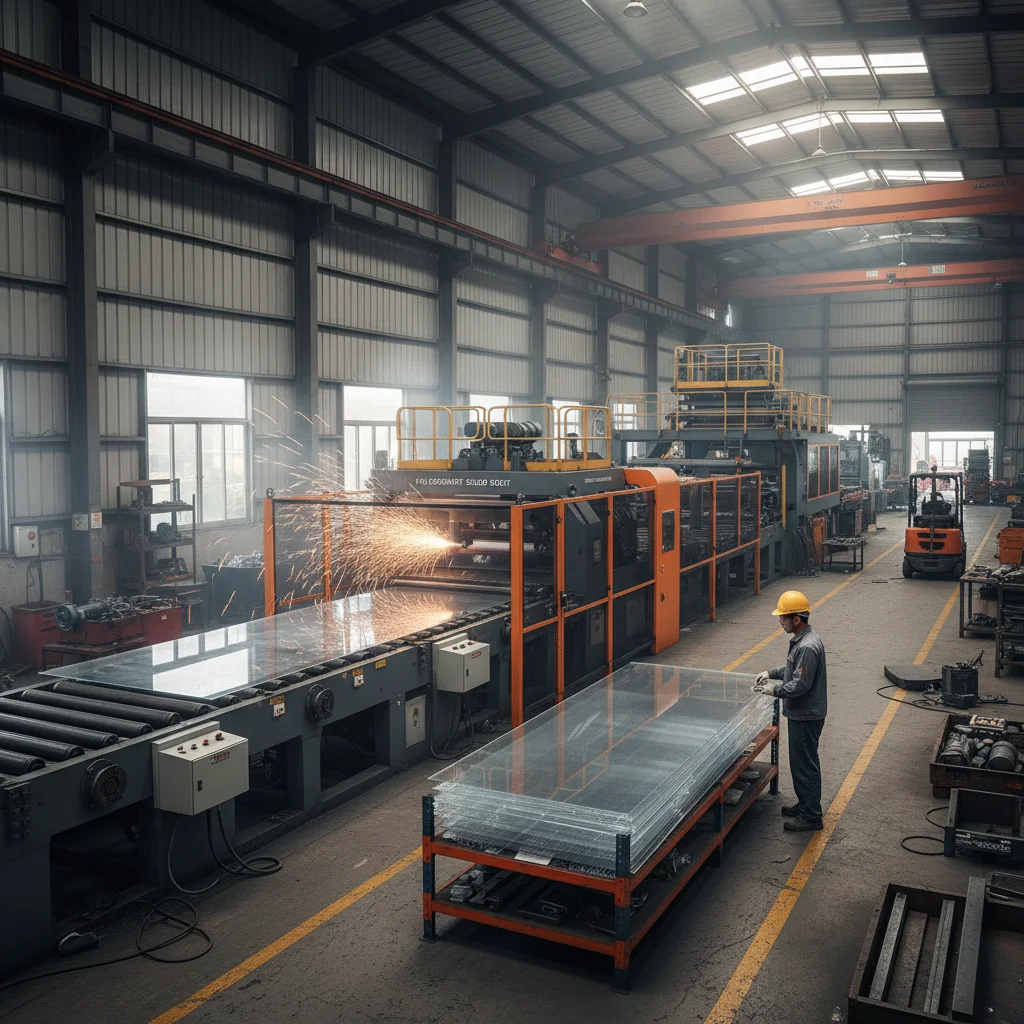
In the modern landscape of industrial architecture, the integration of natural light has evolved from a luxury to a functional necessity. The PC Lighting Corrugated Sheet stands at the forefront of this evolution, offering a high-performance alternative to traditional glass or fragile plastics. By combining the structural rigidity of corrugated design with the optical clarity of polycarbonate, these sheets allow facilities to reduce their reliance on artificial lighting, thereby lowering operational costs and improving the well-being of workers.
Globally, the demand for sustainable building materials has spiked as industries strive to meet stringent ISO environmental standards and energy-efficiency benchmarks. The implementation of PC Lighting Corrugated Sheet solves the age-old conflict between the need for a secure, weather-proof roof and the desire for interior illumination. From massive logistics warehouses in Europe to agricultural greenhouses in Southeast Asia, this material is redefining how we perceive industrial envelopes.
Understanding the technical nuances of these sheets—ranging from UV stabilization to impact resistance—is crucial for engineers and procurement managers. Selecting the right grade of polycarbonate ensures that a structure remains durable against extreme weather while maintaining its translucency over decades. This guide explores the comprehensive utility, technical advantages, and future trajectory of this essential structural component.
Global Relevance of PC Lighting Corrugated Sheet
The global push toward "Green Building" certifications has placed the PC Lighting Corrugated Sheet in a position of strategic importance. As energy prices fluctuate and carbon taxes become a reality for manufacturers, the ability to harvest passive solar lighting becomes a financial imperative. Statistics indicate that industrial facilities utilizing translucent roofing can reduce their daytime electricity consumption for lighting by up to 30%, directly impacting the bottom line.
Beyond the economic metrics, there is a significant human element. World Health Organization (WHO) guidelines emphasize that natural light improves worker productivity and reduces occupational stress. By replacing opaque metal cladding with structured polycarbonate, companies create a healthier work environment while maintaining the structural integrity required for heavy industrial use.
Technical Definition and Industrial Meaning
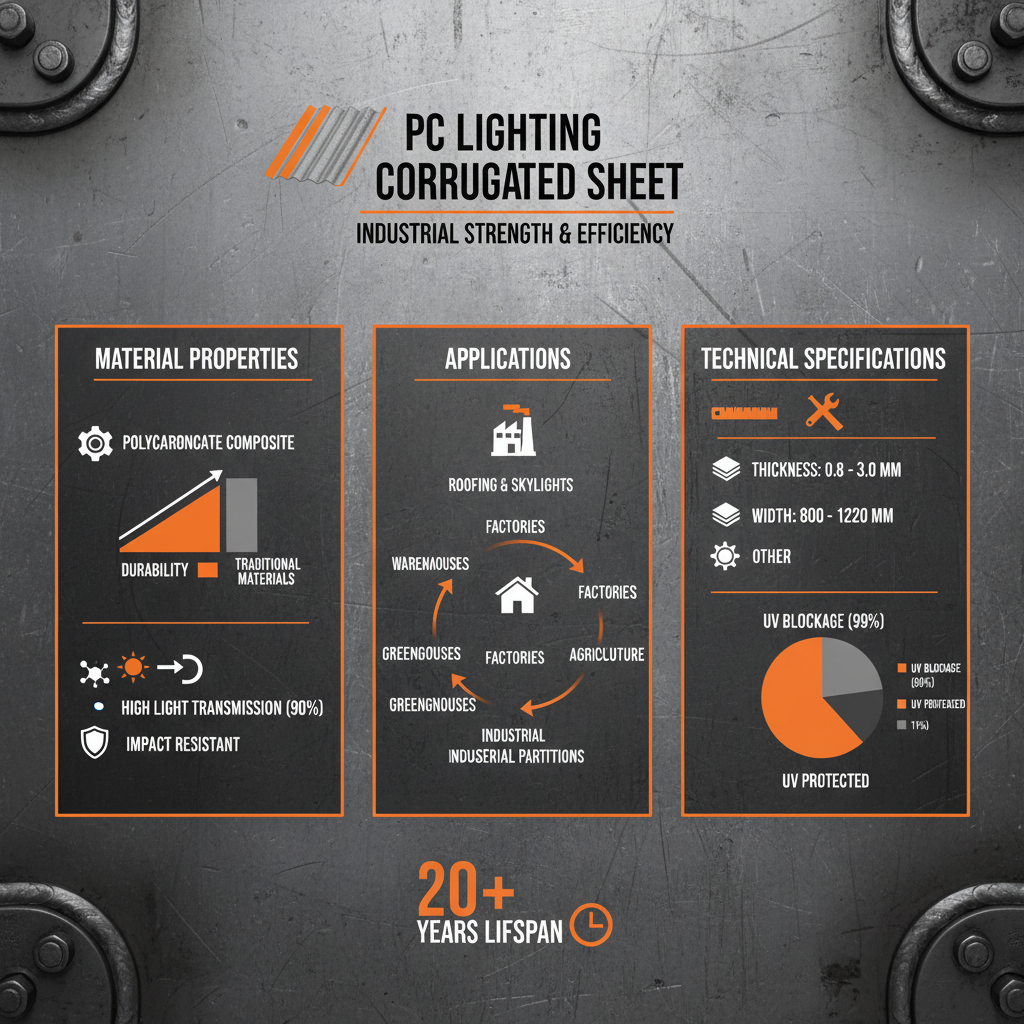
At its core, a PC Lighting Corrugated Sheet is an engineered thermoplastic panel made from high-grade polycarbonate resin, formed into a wave-like or corrugated profile. This specific geometry is not merely aesthetic; it provides the necessary rigidity to span distances between supports without sagging, while the "lighting" aspect refers to its light-transmitting properties that allow diffused sunlight to penetrate the interior.
In the context of modern manufacturing, this material represents a bridge between heavy-duty steel structures and lightweight polymers. It is designed to be compatible with standard steel purlins and corrugated metal sheets, allowing for a seamless hybrid roofing system. This means that an industrial plant can have 90% steel roofing for maximum security and 10% polycarbonate for optimal light distribution.
Furthermore, the "meaning" of this product extends to humanitarian and rapid-deployment needs. Because these sheets are lightweight yet nearly unbreakable, they are frequently used in temporary shelters and emergency industrial hubs in disaster-stricken areas, providing a safe, illuminated space for operations where permanent infrastructure has failed.
Core Components of High-Performance PC Sheets
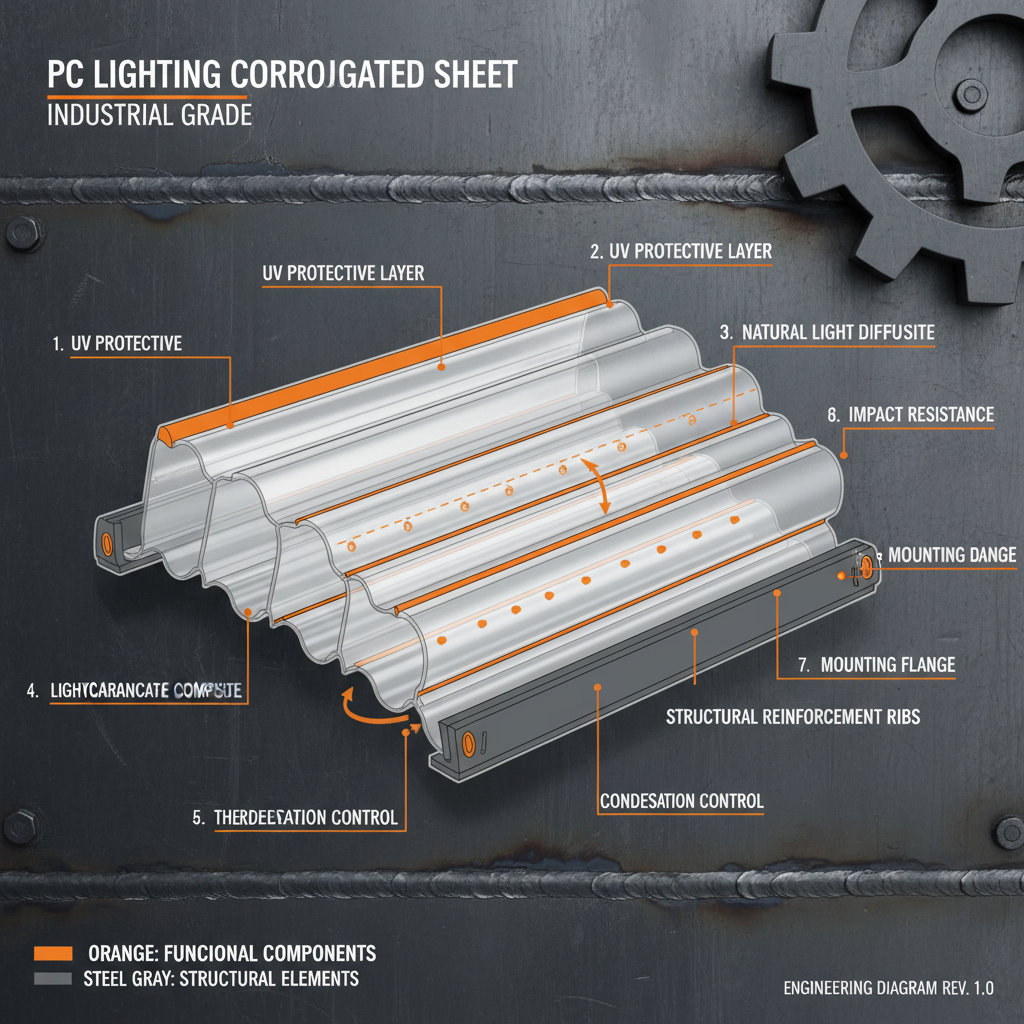
The durability of a PC Lighting Corrugated Sheet is primarily derived from its impact resistance. Polycarbonate is renowned for being virtually unbreakable, offering a strength-to-weight ratio that far exceeds that of acrylic or fiberglass. This ensures that the sheets can withstand hail, falling debris, and high wind loads without cracking.
A critical component is the UV-protective co-extrusion layer. Without this specialized coating, the PC Lighting Corrugated Sheet would succumb to photo-degradation, leading to yellowing and brittleness over time. Modern sheets feature a dual-sided or single-sided UV shield that filters harmful rays while allowing visible light to pass through, extending the lifespan of the material to 15-20 years.
Thermal stability and flame retardancy are the final pillars of its design. High-quality sheets are manufactured to be self-extinguishing, meeting strict fire safety codes for industrial warehouses. Additionally, the material is engineered to expand and contract predictably during temperature swings, preventing the fasteners from pulling through the sheet during extreme winter or summer cycles.
Global Applications and Use Cases
The versatility of the PC Lighting Corrugated Sheet allows it to be deployed across diverse sectors. In the agricultural sector, it is the gold standard for high-tech greenhouses in the Netherlands and Canada, where maximizing sunlight for crop growth while maintaining a controlled internal climate is essential. The corrugated shape prevents water pooling and allows for rapid drainage during heavy rains.
In heavy industrial zones, such as the automotive plants in Germany or electronics hubs in China, these sheets are integrated into the roofing of assembly lines. By reducing the "cave effect" of deep industrial buildings, they improve visibility for precision work and reduce the psychological fatigue of employees who spend ten hours a day indoors.
Comparative Performance of PC Lighting Corrugated Sheet Variants
Long-Term Value and Sustainability Benefits
Investing in PC Lighting Corrugated Sheet provides tangible long-term financial value. Beyond the immediate energy savings, the low maintenance requirements significantly reduce the Total Cost of Ownership (TCO). Unlike glass, which requires frequent cleaning and carries a high risk of breakage, polycarbonate is resilient and easy to maintain with simple soap-and-water solutions.
From a sustainability perspective, the material is often recyclable, aligning with the circular economy goals of modern enterprises. By reducing the heat load on HVAC systems through diffused light (which prevents the "greenhouse effect" seen with clear glass), these sheets contribute to a lower overall carbon footprint for the facility.
Future Trends in Polycarbonate Innovation
The future of the PC Lighting Corrugated Sheet is moving toward "Smart Materials." We are seeing the emergence of photo-chromic polycarbonate that can change its opacity based on the intensity of the sunlight, automatically darkening during the peak of summer to keep interiors cool and clearing up during winter to maximize heat gain.
Digital transformation is also playing a role in the manufacturing process. With the advent of precision 3D molding and AI-driven structural analysis, corrugated profiles are being optimized to offer even higher load-bearing capacities with less material, further reducing the environmental impact of production.
Additionally, the integration of BIPV (Building-Integrated Photovoltaics) is on the horizon. Imagine a PC Lighting Corrugated Sheet that not only lets in light but also captures solar energy through embedded transparent conductive films, turning the entire roof of a factory into a power plant.
Overcoming Implementation Challenges
Despite its advantages, some users face challenges during installation, primarily regarding thermal expansion. Because polycarbonate expands more than steel, using rigid fasteners can lead to cracking. The solution lies in using oversized pre-drilled holes and EPDM rubber washers, which allow the PC Lighting Corrugated Sheet to "float" and move slightly as temperatures change.
Another common concern is the accumulation of dust and debris on the corrugated ridges, which can diminish light transmission over time. Expert insight suggests the installation of a slight pitch (minimum 5-10 degrees) to encourage self-cleaning during rain showers, ensuring the sheets maintain their optical efficiency.
Finally, cost can be a barrier when compared to low-grade PVC or fiberglass. However, when analyzed through the lens of lifespan and energy savings, the ROI for high-quality polycarbonate is far superior. We recommend a life-cycle cost analysis to demonstrate how the initial investment is recouped within 3-5 years.
Technical Specification Analysis for PC Lighting Corrugated Sheet Implementation
|
Material Grade
|
Light Transmission Rate
|
Impact Strength (kJ/m²)
|
Expected Service Life
|
| Standard Clear |
88% - 92% |
15 - 20 |
10 Years |
| UV-Stabilized Clear |
85% - 90% |
18 - 25 |
15 Years |
| Opal Diffused |
50% - 65% |
16 - 22 |
12 Years |
| Industrial Bronze |
40% - 55% |
17 - 23 |
15 Years |
| Heat-Reflective |
60% - 75% |
14 - 20 |
10 Years |
| Premium High-Impact |
82% - 88% |
25 - 35 |
20 Years |
FAQS
Polycarbonate is significantly more impact-resistant and does not "yellow" or become brittle as quickly as fiberglass. While fiberglass can crack under heavy hail or impact, PC sheets are virtually unbreakable. Additionally, PC sheets offer superior light transmission and better thermal insulation properties, making them more energy-efficient for industrial roofing.
Depending on the UV protection grade, these sheets typically last between 10 to 20 years. In environments with high chemical exposure or extreme UV radiation, we recommend high-grade co-extruded UV-stabilized sheets, which maintain their transparency and structural integrity for significantly longer periods compared to standard plastics.
Yes, they are highly eco-friendly as they reduce electricity consumption by harvesting natural light and are often recyclable. In terms of cost, while the initial material price may be higher than some alternatives, the reduction in lighting bills and lower maintenance costs provide a very fast return on investment (ROI), often within a few years.
Absolutely. They are designed specifically to be compatible with standard corrugated steel profiles. By using the same fixing methods—such as self-tapping screws with EPDM gaskets—they can be easily integrated into new builds or retrofitted into existing roofs to add lighting zones.
The key is using specialized fasteners that include high-quality EPDM rubber washers. Because polycarbonate expands and contracts with temperature, the washer creates a flexible, watertight seal that moves with the material, preventing leaks while ensuring the sheet remains securely fastened to the purlins.
Yes, by selecting "Opal" or "Bronze" tinted sheets, you can diffuse the sunlight and reduce direct solar heat gain. These colors scatter the light, providing a soft, even glow throughout the facility while blocking a portion of the infrared heat, which helps in maintaining a cooler internal temperature.
Conclusion
The PC Lighting Corrugated Sheet is more than just a roofing material; it is a strategic asset for any industrial or agricultural operation. By balancing extreme durability with the ability to harvest natural light, it addresses the critical needs of energy efficiency, worker wellness, and structural longevity. From its UV-stabilized core to its versatile corrugated geometry, every aspect of this material is engineered to withstand the rigors of the industrial world.
Looking forward, the integration of smart technologies and sustainable production methods will only enhance the value of polycarbonate solutions. We encourage facility managers and architects to move beyond traditional opaque roofing and embrace the benefits of translucency. By optimizing the interplay between light and structure, you can create spaces that are not only productive and safe but also environmentally responsible. Visit our website for more information: www.ymc-machinery.com